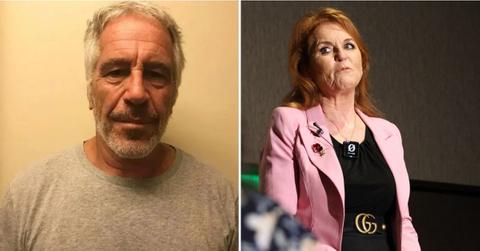
EXPOSED: Jean-Luc Brunel's Sex Parties With Jeffrey Epstein – Leaked Videos Inside!
What really happened behind the closed doors of Jeffrey Epstein's private island? The name Jean-Luc Brunel has emerged as a central figure in one of the most disturbing sex trafficking scandals of our time. As a French modeling agent and close associate of Jeffrey Epstein, Brunel's connections ran deep, his influence was vast, and his secrets were potentially devastating to some of the world's most powerful men.
The investigation into Epstein's network revealed a web of exploitation that spanned continents and involved some of the most influential figures in business, politics, and entertainment. At the center of this web was Jean-Luc Brunel, a man who allegedly used his position in the fashion industry to recruit young women for Epstein's circle. But what makes this story even more chilling is that Brunel died in custody before he could stand trial, leaving many questions unanswered and justice unserved.
Jean-Luc Brunel Biography
Jean-Luc Brunel was a French modeling agent who built a career in the fashion industry that would ultimately become intertwined with one of the most notorious criminal cases of the 21st century. His life and career took a dark turn as he became associated with Jeffrey Epstein's illegal activities.
- Shocking Leak Epsteins Secret Sex Tapes With Nude Victims Surface In New Charges
- Mike Lindell Net Worth 2024
- Bellingham Religion
- The Dark Web Of Epstein How Leaked Nudes And Sex Tapes Implicated The Rich And Famous
- Shocking Leak Epsteins Illuminati Sex Tapes Exposed
| Personal Details | Information |
|---|---|
| Full Name | Jean-Luc Brunel |
| Nationality | French |
| Profession | Modeling Agent |
| Known For | Epstein Associate, Sex Trafficking Allegations |
| Death | Died in custody before trial |
| Age at Death | 74 years old |
The Epstein Connection: A Deadly Alliance
The relationship between Jean-Luc Brunel and Jeffrey Epstein was more than just a casual friendship. According to prosecutors, Brunel played a crucial role in Epstein's operation by recruiting and transporting young women—including minors—to supply them to Epstein and his wealthy circle. The allegations suggest that Brunel often used promises of modeling work as bait to lure unsuspecting victims into Epstein's web of exploitation.
French investigators took these claims seriously, probing rape, sexual assault, and trafficking claims against Brunel before his death in custody. The investigation was extensive, with documents showing that Brunel had 21 flight log appearances, 431 document mentions, 3 email references, and 18 known connections in the Epstein files. This level of documentation suggests that Brunel was deeply embedded in Epstein's operation and played a significant role in facilitating the trafficking network.
The Cooperation That Never Happened
In a shocking revelation, French modeling agent Jean-Luc Brunel was at one point prepared to cooperate with the U.S. Justice Department. Documents cited in an exclusive report by the Wall Street Journal revealed that in 2016, Brunel quietly entered discussions with lawyers representing Epstein's interests. This potential cooperation raised hopes that Brunel might provide crucial testimony that could expose the full extent of Epstein's criminal network.
- Anna Sawai Relationship
- Judge Joe Brown Son
- Chrissy Teigen Furious Over Epsteins Nude Parties Leaked Footprint Connects Her
- Partner Claire Rushbrook Husband
- The Dark Truth About Jeffrey Epsteins Height A Foot Measurement That Will Haunt You
However, these discussions never materialized into actual cooperation. The reasons behind Brunel's decision to withdraw from potential cooperation remain unclear, but his death in custody meant that the world would never hear his full testimony. The timing of these discussions is particularly significant, as they occurred years before Epstein's arrest and subsequent death, suggesting that authorities had been aware of Brunel's potential value as a witness for quite some time.
The Evidence That Could Have Changed Everything
Brunel had the photos, the names, and a date set to testify against Epstein in February 2016. This information suggests that authorities had gathered substantial evidence against both men and were preparing for a major legal confrontation. The fact that Brunel was scheduled to testify indicates that prosecutors believed he had crucial information that could strengthen their case against Epstein.
The evidence reportedly included photographs, documentation of victims' identities, and detailed accounts of the trafficking operations. This type of evidence would have been invaluable in building a comprehensive case against Epstein and his associates. The scheduled testimony date also suggests that the investigation had reached an advanced stage, with authorities confident in their ability to secure convictions based on the evidence they had collected.
The Birthday Party Photo: A Chilling Reminder
One particularly disturbing piece of evidence that emerged during the investigation was a photograph showing Epstein and Brunel during a birthday party for Epstein. This seemingly innocuous image takes on a sinister tone when viewed in the context of the criminal allegations against both men. The photo serves as a stark reminder of the close relationship between Epstein and his associates, and the casual nature with which they appeared to conduct their activities.
The name associated with this photo was reportedly an inside joke, though the exact nature of the joke remains unclear. This detail adds another layer of complexity to the case, suggesting that Epstein and his associates may have used coded language or references to communicate about their illegal activities. Such inside jokes could have served as a way to maintain secrecy while also creating a sense of camaraderie among those involved in the criminal enterprise.
The Critical Testimony of Maritza Vazquez
Maritza Vazquez, who worked as a bookkeeper for MC2 Model Management, provided critical testimony placing Jean-Luc Brunel and Jeffrey Epstein at the center of a carefully managed system of underage recruitment and abuse. Her deposition offered investigators valuable insights into the inner workings of the trafficking operation and the roles played by both Brunel and Epstein.
In her testimony, Vazquez identified Brunel as a regular passenger on Epstein's private jet and noted that Epstein often traveled with girls recruited through MC2—some as young as 14 years old. This testimony directly connected Brunel to the transportation of minors and established a pattern of abuse that spanned multiple years. Vazquez's position as a bookkeeper also meant that she had access to financial records and travel documentation that could corroborate the victims' accounts and establish a timeline of criminal activity.
The System of Recruitment and Abuse
The testimony and evidence gathered in the investigation paint a picture of a carefully managed system of recruitment and abuse. Epstein and Brunel allegedly worked together to identify vulnerable young women, often promising them modeling opportunities or other career advancement. Once recruited, these women would be transported to various locations where they would be subjected to sexual abuse and exploitation.
The use of a modeling agency as a front for recruitment was particularly insidious, as it preyed on young women's dreams of success in the fashion industry. The promise of meeting influential people, attending exclusive events, and launching a modeling career made the initial approach seem legitimate and exciting. However, this facade concealed the true nature of the operation, which was focused on sexual exploitation and trafficking.
The International Scope of the Operation
The investigation revealed that the trafficking operation had an international scope, with connections spanning multiple countries and continents. Brunel's French nationality and connections in the European fashion industry meant that the operation could recruit victims from various countries and transport them across international borders. This international dimension made the investigation more complex and required cooperation between law enforcement agencies in different countries.
The use of private jets for transportation also added to the international scope of the operation. Epstein's fleet of aircraft allowed him and his associates to move victims quickly and discreetly between various locations, including his properties in New York, Florida, New Mexico, and the Caribbean. This mobility made it difficult for authorities to track the movement of victims and gather evidence of the trafficking activities.
The Power Dynamics at Play
The Epstein-Brunel operation was characterized by extreme power imbalances, with wealthy and influential men exploiting vulnerable young women. The victims, many of whom were from disadvantaged backgrounds or had limited support systems, were particularly susceptible to manipulation and coercion. The promise of financial compensation, career opportunities, and access to exclusive social circles made it difficult for many victims to recognize the danger they were in or to refuse the advances of their abusers.
The power dynamics were further reinforced by the social status and connections of Epstein and his associates. Many victims reported feeling intimidated by the wealth and influence of their abusers, and some feared retaliation if they attempted to speak out or seek help. The involvement of high-profile individuals in Epstein's circle also created a sense of impunity, with victims believing that their abusers were untouchable by law enforcement.
The Legal Challenges and Obstacles
The investigation into Epstein and Brunel faced numerous legal challenges and obstacles. The complexity of the case, involving multiple jurisdictions and international elements, required extensive coordination between law enforcement agencies and prosecutors. The involvement of high-profile individuals also meant that the case attracted significant media attention and political pressure, which could have influenced the investigation and prosecution.
One of the most significant obstacles was the 2008 plea deal that Epstein received in Florida, which allowed him to serve only 13 months in county jail despite facing more serious federal charges. This deal, which was later found to have been made without the knowledge of victims, severely limited the ability of prosecutors to pursue more serious charges against Epstein and his associates. The controversy surrounding this plea deal highlighted the challenges of prosecuting powerful individuals and the need for greater accountability in the justice system.
The Death of Jean-Luc Brunel: Unanswered Questions
The death of Jean-Luc Brunel in custody before he could stand trial left many questions unanswered and justice unserved. While official reports stated that Brunel died by suicide, the circumstances surrounding his death have been the subject of much speculation and controversy. The timing of his death, coming as it did just as he was about to face trial, has led some to question whether there were other factors at play.
Brunel's death meant that he would never have the opportunity to provide testimony or evidence that could have shed light on the full extent of Epstein's operation. It also meant that many of his victims would never have the chance to confront him in court or receive closure through the legal process. The loss of this potential testimony represents a significant setback in the pursuit of justice for Epstein's victims and the exposure of the full scope of the trafficking network.
The Legacy of the Epstein Scandal
The Epstein scandal and the involvement of figures like Jean-Luc Brunel have had a lasting impact on public awareness of sex trafficking and the exploitation of vulnerable individuals. The case has highlighted the need for greater protections for victims, more robust investigation and prosecution of trafficking crimes, and increased scrutiny of the power dynamics that enable such exploitation to occur.
The scandal has also led to calls for reform in various areas, including the modeling industry, where concerns about the exploitation of young models have been raised. There have been demands for greater oversight of modeling agencies, improved protections for young models, and more stringent background checks for industry professionals. The case has also sparked discussions about the need for greater accountability for wealthy and influential individuals who engage in criminal activities.
Conclusion
The story of Jean-Luc Brunel and his connection to Jeffrey Epstein represents one of the most disturbing chapters in recent criminal history. The allegations of sex trafficking, the exploitation of minors, and the involvement of powerful individuals have shocked the world and exposed the dark underbelly of wealth and influence. While Brunel's death in custody means that he will never face trial for his alleged crimes, the investigation into his activities and his connection to Epstein has provided valuable insights into the operation of international trafficking networks.
The legacy of this scandal continues to resonate, prompting calls for reform, greater protections for victims, and increased accountability for those who exploit vulnerable individuals. As more information comes to light and investigations continue, the hope is that justice will be served for the victims and that measures will be put in place to prevent similar exploitation in the future. The case serves as a stark reminder of the importance of vigilance, the need for robust legal protections, and the ongoing fight against human trafficking in all its forms.